Buy architekturfotografie.eu ?
We are moving the project
architekturfotografie.eu .
Are you interested in purchasing the domain
architekturfotografie.eu ?
domain@kv-gmbh.de · 0541-91531010
Buy architekturfotografie.eu ?
What is the difference between interior architecture and interior design?
Interior architecture focuses on the structural and spatial elements of a space, including the layout, flow, and functionality. It involves designing and coordinating the interior structure of a building, such as walls, ceilings, and floors. On the other hand, interior design focuses on the aesthetics and decorative aspects of a space, including furniture, color schemes, and accessories. It involves creating a cohesive and visually appealing environment that reflects the client's needs and style preferences. While interior architecture deals with the physical structure of a space, interior design focuses on the visual and decorative elements. **
What is better, product design or interior architecture?
The answer to whether product design or interior architecture is better ultimately depends on personal interests and career goals. Product design involves creating tangible objects that serve a specific function, while interior architecture focuses on designing interior spaces that enhance the user experience. Both fields offer unique opportunities for creativity and innovation, so it is important to consider which aligns more with your passions and strengths. Ultimately, the decision between product design and interior architecture should be based on individual preferences and career aspirations. **

Similar search terms for Argue
Top-Angebote
Products related to Argue:
-
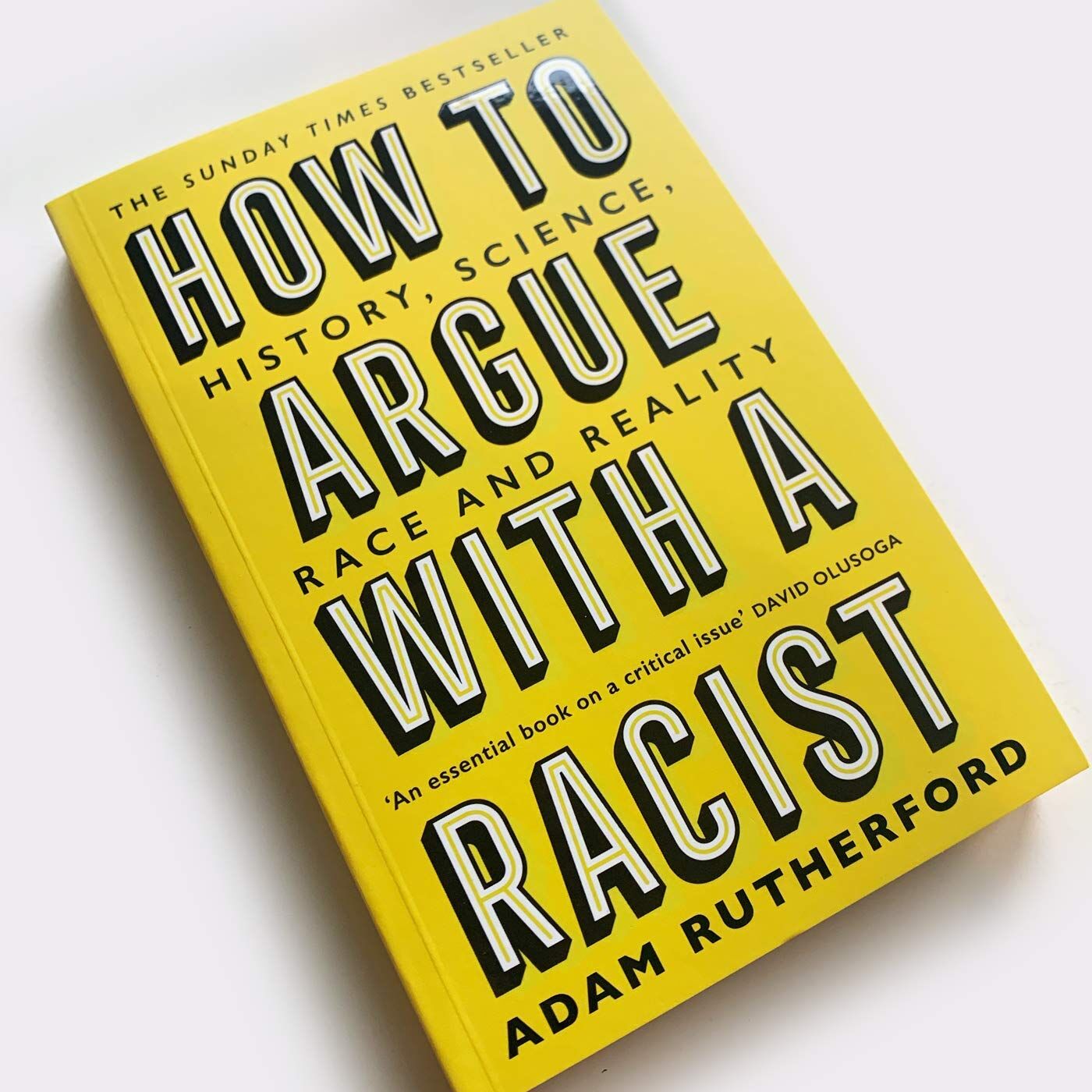
Adam Rutherford How to Argue With a Racist: History, Science, Race - Non Fiction - HardbackTitle:. How to Argue With a Racist: History, Science, Race and Reality Condition: BRAND NEW. Format: Hardcover Overview:. Race is widely perceived as a real category, but the book’s core argument is that race is a social construct while racism remains a tangible and dangerous force in society. Adam Rutherford guides readers through a rigorous tour of history, genetics, and contemporary culture to show why attempts to anchor human difference in biology are scientifically unfounded and ethically harmful. This book equips readers with clear, evidence-based explanations of how human genetic variation actually works, how populations are related, and why modern science rejects fixed racial hierarchies. It also dissects the seductive but misleading uses of data in public debates about migration, education, intelligence, and sport. Written for curious readers and students alike, the author translates complex genetics into accessible, concrete examples drawn from real-world situations, helping readers recognize pseudoscience, debunk stereotypes, and engage in constructive dialogue. The hardcover edition presents a concise, readable companion for classrooms, book clubs, or thoughtful conversations on social media, making this a vital resource in the ongoing fight against racial prejudice. What Makes This Book Stand Out:. Adam Rutherford blends a historian’s perspective with a geneticist’s precision to illuminate why race as a biological category never stood up to scrutiny, and why racism persists despite that truth. What distinguishes this work is its dual clarity and courage: it not only unpacks the science behind human diversity but also analyzes the social forces that weaponize that science to justify discrimination. Rutherford’s approach is decidedly practical—he offers approachable explanations of population genetics, discusses how data can be misinterpreted, and provides ready-to-use arguments for conversations with skeptical friends, students, or readers online. He also foregrounds the ethics of scientific communication, urging readers to demand evidence, question assumptions, and separate human value from statistical variation. This is more than a textbook; it’s a persuasive, timely guide for anyone who wants to challenge racism with intellectual honesty and empathy. Who This Book Is Perfect For:. If you’re curious about how science intersects with social justice, this book is for you. It’s ideal for students, educators, journalists, and anyone engaging in public debates about race, genetics, and identity. Parents and caregivers will value the accessible explanations that help explain difficult topics to younger readers, while book clubs and discussion groups will find ample material for thoughtful conversation. Perfect for readers who enjoy science communication, history-informed analysis, and debates about policy and culture, it also works well for BookTok and other communities seeking credible, engaging material that supports informed,...99,99 £*Shipping: 0,00 £Secure redirect to the provider
-
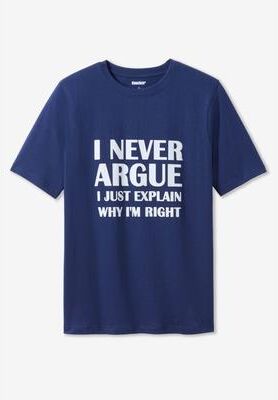
Men's Big & Tall KingSize Slogan Graphic T-Shirt by KingSize in Never Argue (Size XL)"These easygoing tees are full of personality. You're sure to find the perfect screenprint tee for you.Relaxed fitCrewneckChest screenprint 100% cotton Big length approx. 33""; Tall length approx. 35"" Machine washImported Men's Big & Tall KingSize..."29,99 $*Shipping: 0,00 $Secure redirect to the provider
-
How to Argue With a Meat Eater (And Win Every Time) (Vermilion) - Non Fiction - PaperbackTitle:. How to Argue With a Meat Eater (And Win Every Time) Format: Paperback Overview:. How to Argue With a Meat Eater (And Win Every Time) is a practical, non-fiction guide designed for anyone who wants to bring clarity to one of modern life’s most charged conversations: meat consumption and animal welfare. Written in a calm, accessible voice, this Vermilion paperback edition offers a structured approach to discussing ethics, sustainability, health, and food choices without descending into hostility. The book emphasizes listening as a tool, asking questions, and presenting evidence in a respectful, persuasive way. It provides a toolbox of conversation techniques: framing arguments around shared values, acknowledging uncertainty, and differentiating between moral principles and personal preferences. The goal is not to shame or triumph at all costs, but to invite thoughtful dialogue that respects both sides while making a compelling case for vegan or reduced-meat choices. Readers will find practical examples, quick-reference talking points, and a strategy for keeping conversations productive even when tensions run high. This is ideal for curious omnivores, committed vegans, students of ethics or communication, and anyone who wants to navigate difficult topics with empathy and clarity. What Makes This Book Stand Out:. For a non-fiction guide, this book stands out by blending ethical reasoning with practical debate tactics, using accessible language as if speaking with a friend rather than lecturing from a podium. It focuses on the core of constructive dialogue: listening, questions, and evidence-based responses. It avoids dogmatic certainty and helps readers recognize common misdirections or logical fallacies in arguments about meat. It offers a clear framework: define the issue, outline values, present the facts, check for understanding, and agree on next steps. The tone balances advocacy with respect, making it suitable for classroom discussions, debate clubs, or quiet conversations at the dinner table. The author’s emphasis on empathy ensures readers can remain curious and open, even when faced with staunch opposition. Practical, non-judgmental, and relentlessly useful, this book works as both a quick-reference guide and a thoughtful long-term resource for anyone who wants to discuss food ethics more confidently. Who This Book Is Perfect For:. Perfect for readers who want to refine communication around contentious food choices. It’s a strong fit for vegan advocates seeking durable talking points, omnivores exploring ethical reasons to reduce meat, students studying ethics or communication, teachers guiding debates, and gift buyers looking for a thoughtful, conversation-starting present. Book clubs, ethics courses, and debate societies will appreciate the structured approach and accessible language. The paperback format makes it easy to carry to a classroom, a cafe, or a family dinner, so you can reference the framework in the moment. Whether...12,99 £*Shipping: 2,99 £Secure redirect to the provider
-
Adam Rutherford How to Argue with a Racist: History, Science, Race and Reality - Non Fiction - PaperbackTitle:. How to Argue With a Racist: History, Science, Race and Reality Condition: BRAND NEW. Format: Paperback Overview:. This timely non-fiction explores how to challenge racist ideas by rooting discussion in history and robust science. How to Argue With a Racist examines how the concept of race has evolved across centuries and why biology does not support racial hierarchies. Adam Rutherford, a British geneticist and science communicator, guides readers through the evolving study of human variation, showing that genetic differences between populations are small and do not justify sweeping claims about intelligence, behavior, or worth. The book connects these ideas to real-world conversations—politics, migration, education, sport and beyond—demonstrating that misinformation about race can influence policy and everyday judgments. Rather than a dry treatise, the work offers practical, accessible reasoning: clear talking points, verification tricks, and thoughtful, respectful responses that dismantle pseudoscience without resorting to hostility. It aims to empower readers to think critically, respond confidently, and protect vulnerable communities through informed dialogue. This is a indispensable guide for students, educators, parents, book clubs, and anyone who wants to participate in public debate with accuracy and empathy. What Makes This Book Stand Out:. Adam Rutherford brings the power of rigorous science to a pressing social issue with clarity and wit. The book blends history, anthropology, and genetics to debunk the notion of race as a biological reality, while tracing how race science has shaped policy and prejudice. Rutherford’s voice remains authoritative yet accessible, translating dense evidence into practical conclusions you can apply in conversations, classrooms, or online debate. The structure encourages reflection and dialogue, featuring concise explanations, concrete examples, and strategies for challenging misinformation without alienating listeners. It’s widely recognised as a timely antidote to racial pseudoscience, with notable reception that highlights its usefulness for data lovers, students, and anyone seeking to understand how science informs public discourse about race. The work has been celebrated for turning complex scientific ideas into a persuasive, constructive toolkit for everyday life. Who This Book Is Perfect For:. This book is ideal for curious readers who want a solid grasp of the science behind race and racism. It suits adults and older teens engaged with non-fiction, science, history, and social issues, as well as educators, students, librarians, and book clubs seeking evidence-based discussion material. If you’re preparing for debates, coursework, or policy conversations, this book provides a reliable foundation to counter misinformation with nuance and respect. It also makes a thoughtful gift for parents, science enthusiasts, and colleagues who want to engage constructively in conversations about bias,...99,99 £*Shipping: 0,00 £Secure redirect to the provider



-
How can one study architecture or interior design?
One can study architecture or interior design by enrolling in a formal education program such as a bachelor's or master's degree in architecture or interior design at a university or college. These programs typically cover design principles, building technology, history of architecture, and practical skills such as drafting and computer-aided design. Additionally, gaining practical experience through internships or apprenticeships with established architects or designers can provide valuable hands-on learning opportunities. Networking with professionals in the field and attending workshops, conferences, and exhibitions can also help in expanding one's knowledge and skills in architecture or interior design. **
-
What is the difference between interior design and architecture?
Interior design focuses on the aesthetic and functional aspects of the interior spaces within a building, including furniture, color schemes, and decor. It involves creating a cohesive and visually appealing environment that meets the needs and preferences of the occupants. On the other hand, architecture is the art and science of designing and constructing buildings and other physical structures. It encompasses the overall design, structural integrity, and functionality of the entire building, including the exterior and interior spaces. While interior design focuses on the interior environment, architecture encompasses the entire built environment. **
-
How can one transition from interior design to architecture?
One can transition from interior design to architecture by pursuing further education and obtaining a degree in architecture. This will provide a deeper understanding of structural design, building systems, and construction methods. Additionally, gaining experience in architectural firms or working on architectural projects can help in making the transition. It is also important to develop a strong portfolio that showcases architectural design skills and knowledge. Networking with architects and seeking mentorship can also be beneficial in making the transition from interior design to architecture. **
-
Is photography sufficient as a portfolio for studying interior design?
Photography can be a valuable component of an interior design portfolio, as it allows students to showcase their ability to capture and present their design work. However, a comprehensive interior design portfolio should also include hand-drawn sketches, technical drawings, mood boards, and other visual representations of design concepts. These additional elements demonstrate a student's creativity, technical skills, and design process, which are important aspects of studying interior design. Therefore, while photography is important, it should be supplemented with a variety of other visual materials to create a well-rounded portfolio for studying interior design. **


How can one switch from studying architecture to interior design?
To switch from studying architecture to interior design, one can start by researching the specific requirements and courses needed for a degree in interior design. It may be necessary to take additional classes or pursue a new degree program focused on interior design. Building a portfolio that showcases relevant skills and projects related to interior design can also help in making the transition. Networking with professionals in the interior design field and seeking internships or job opportunities in interior design firms can provide valuable experience and connections. **
Is it important for you to argue cleanly when you argue?
Yes, it is important for me to argue cleanly when I argue. Clean arguing means focusing on the issue at hand, using logical reasoning, and avoiding personal attacks or disrespectful language. Clean arguing allows for a more productive and respectful exchange of ideas, and can lead to a better understanding of different perspectives. It also helps to maintain positive relationships with others, even when there are disagreements. **
Top-Angebote
Products related to Argue:
-
The Next Conversation: Argue Less, Talk More by Jefferson FisherDescription. Title:. The Next Conversation: Argue Less, Talk More. Condition: BRAND NEW. Format: Paperback. ISBN: 9780241719886. Trial lawyer Jefferson Fisher has gained millions of followers through short, simple, practical videos teaching people how to argue less and talk more.. And now he offers a tried-and-true framework that will show you how to transform your life and your relationships. His down-to-earth teachings and actionable strategies have helped countless people navigate life’s toughest situations. You will learn:. Why you should never “win” an argument. How to set boundaries and frame conversations. Why saying less is often more. How to overcome conflict with connection. About The Author:. Jefferson Fisher is a trial lawyer, writer, and speaker whose work to help people communicate during life’s everyday arguments and conversations, with his practical videos and authentic presence, has gained millions of followers around the world, including celebrities and global leaders. He is a sought-after speaker on communication at Fortune 500 companies, and hundreds of thousands of people subscribe to his email newsletter and podcast. He lives with his wife and two children in Texas.. Title. The Next Conversation: Argue Less, Talk More by Jefferson Fisher. Delivery. Content. Reviews14,99 £*Shipping: 2,99 £Secure redirect to the provider
-
Orion How to Argue With a Racist by Adam Rutherford – Science, Race & Truth ExplainedRacist pseudoscience may be on the rise, but science is no ally to racists. Instead science and history can be powerful allies against bigotry, granting us the clearest view of how people actually are, rather than how we judge them to be. HOW TO ARGUE WITH A RACIST dismantles outdated notions of race by illuminating what modern genetics can and can't tell us about human difference. It is a vital manifesto for a twenty-first century understanding of human evolution and variation, and a timely weapon against the misuse of science to justify racism.3,99 £*Shipping: 1,99 £Secure redirect to the provider
-
Adam Rutherford How to Argue With a Racist: History, Science, Race - Non Fiction - HardbackTitle:. How to Argue With a Racist: History, Science, Race and Reality Condition: BRAND NEW. Format: Hardcover Overview:. Race is widely perceived as a real category, but the book’s core argument is that race is a social construct while racism remains a tangible and dangerous force in society. Adam Rutherford guides readers through a rigorous tour of history, genetics, and contemporary culture to show why attempts to anchor human difference in biology are scientifically unfounded and ethically harmful. This book equips readers with clear, evidence-based explanations of how human genetic variation actually works, how populations are related, and why modern science rejects fixed racial hierarchies. It also dissects the seductive but misleading uses of data in public debates about migration, education, intelligence, and sport. Written for curious readers and students alike, the author translates complex genetics into accessible, concrete examples drawn from real-world situations, helping readers recognize pseudoscience, debunk stereotypes, and engage in constructive dialogue. The hardcover edition presents a concise, readable companion for classrooms, book clubs, or thoughtful conversations on social media, making this a vital resource in the ongoing fight against racial prejudice. What Makes This Book Stand Out:. Adam Rutherford blends a historian’s perspective with a geneticist’s precision to illuminate why race as a biological category never stood up to scrutiny, and why racism persists despite that truth. What distinguishes this work is its dual clarity and courage: it not only unpacks the science behind human diversity but also analyzes the social forces that weaponize that science to justify discrimination. Rutherford’s approach is decidedly practical—he offers approachable explanations of population genetics, discusses how data can be misinterpreted, and provides ready-to-use arguments for conversations with skeptical friends, students, or readers online. He also foregrounds the ethics of scientific communication, urging readers to demand evidence, question assumptions, and separate human value from statistical variation. This is more than a textbook; it’s a persuasive, timely guide for anyone who wants to challenge racism with intellectual honesty and empathy. Who This Book Is Perfect For:. If you’re curious about how science intersects with social justice, this book is for you. It’s ideal for students, educators, journalists, and anyone engaging in public debates about race, genetics, and identity. Parents and caregivers will value the accessible explanations that help explain difficult topics to younger readers, while book clubs and discussion groups will find ample material for thoughtful conversation. Perfect for readers who enjoy science communication, history-informed analysis, and debates about policy and culture, it also works well for BookTok and other communities seeking credible, engaging material that supports informed,...99,99 £*Shipping: 0,00 £Secure redirect to the provider
-
Men's Big & Tall KingSize Slogan Graphic T-Shirt by KingSize in Never Argue (Size XL)"These easygoing tees are full of personality. You're sure to find the perfect screenprint tee for you.Relaxed fitCrewneckChest screenprint 100% cotton Big length approx. 33""; Tall length approx. 35"" Machine washImported Men's Big & Tall KingSize..."29,99 $*Shipping: 0,00 $Secure redirect to the provider
-
What is the difference between interior architecture and interior design?
Interior architecture focuses on the structural and spatial elements of a space, including the layout, flow, and functionality. It involves designing and coordinating the interior structure of a building, such as walls, ceilings, and floors. On the other hand, interior design focuses on the aesthetics and decorative aspects of a space, including furniture, color schemes, and accessories. It involves creating a cohesive and visually appealing environment that reflects the client's needs and style preferences. While interior architecture deals with the physical structure of a space, interior design focuses on the visual and decorative elements. **
-
What is better, product design or interior architecture?
The answer to whether product design or interior architecture is better ultimately depends on personal interests and career goals. Product design involves creating tangible objects that serve a specific function, while interior architecture focuses on designing interior spaces that enhance the user experience. Both fields offer unique opportunities for creativity and innovation, so it is important to consider which aligns more with your passions and strengths. Ultimately, the decision between product design and interior architecture should be based on individual preferences and career aspirations. **
-
How can one study architecture or interior design?
One can study architecture or interior design by enrolling in a formal education program such as a bachelor's or master's degree in architecture or interior design at a university or college. These programs typically cover design principles, building technology, history of architecture, and practical skills such as drafting and computer-aided design. Additionally, gaining practical experience through internships or apprenticeships with established architects or designers can provide valuable hands-on learning opportunities. Networking with professionals in the field and attending workshops, conferences, and exhibitions can also help in expanding one's knowledge and skills in architecture or interior design. **
-
What is the difference between interior design and architecture?
Interior design focuses on the aesthetic and functional aspects of the interior spaces within a building, including furniture, color schemes, and decor. It involves creating a cohesive and visually appealing environment that meets the needs and preferences of the occupants. On the other hand, architecture is the art and science of designing and constructing buildings and other physical structures. It encompasses the overall design, structural integrity, and functionality of the entire building, including the exterior and interior spaces. While interior design focuses on the interior environment, architecture encompasses the entire built environment. **
Similar search terms for Argue
-
How to Argue With a Meat Eater (And Win Every Time) (Vermilion) - Non Fiction - PaperbackTitle:. How to Argue With a Meat Eater (And Win Every Time) Format: Paperback Overview:. How to Argue With a Meat Eater (And Win Every Time) is a practical, non-fiction guide designed for anyone who wants to bring clarity to one of modern life’s most charged conversations: meat consumption and animal welfare. Written in a calm, accessible voice, this Vermilion paperback edition offers a structured approach to discussing ethics, sustainability, health, and food choices without descending into hostility. The book emphasizes listening as a tool, asking questions, and presenting evidence in a respectful, persuasive way. It provides a toolbox of conversation techniques: framing arguments around shared values, acknowledging uncertainty, and differentiating between moral principles and personal preferences. The goal is not to shame or triumph at all costs, but to invite thoughtful dialogue that respects both sides while making a compelling case for vegan or reduced-meat choices. Readers will find practical examples, quick-reference talking points, and a strategy for keeping conversations productive even when tensions run high. This is ideal for curious omnivores, committed vegans, students of ethics or communication, and anyone who wants to navigate difficult topics with empathy and clarity. What Makes This Book Stand Out:. For a non-fiction guide, this book stands out by blending ethical reasoning with practical debate tactics, using accessible language as if speaking with a friend rather than lecturing from a podium. It focuses on the core of constructive dialogue: listening, questions, and evidence-based responses. It avoids dogmatic certainty and helps readers recognize common misdirections or logical fallacies in arguments about meat. It offers a clear framework: define the issue, outline values, present the facts, check for understanding, and agree on next steps. The tone balances advocacy with respect, making it suitable for classroom discussions, debate clubs, or quiet conversations at the dinner table. The author’s emphasis on empathy ensures readers can remain curious and open, even when faced with staunch opposition. Practical, non-judgmental, and relentlessly useful, this book works as both a quick-reference guide and a thoughtful long-term resource for anyone who wants to discuss food ethics more confidently. Who This Book Is Perfect For:. Perfect for readers who want to refine communication around contentious food choices. It’s a strong fit for vegan advocates seeking durable talking points, omnivores exploring ethical reasons to reduce meat, students studying ethics or communication, teachers guiding debates, and gift buyers looking for a thoughtful, conversation-starting present. Book clubs, ethics courses, and debate societies will appreciate the structured approach and accessible language. The paperback format makes it easy to carry to a classroom, a cafe, or a family dinner, so you can reference the framework in the moment. Whether...12,99 £*Shipping: 2,99 £Secure redirect to the provider
-
Adam Rutherford How to Argue with a Racist: History, Science, Race and Reality - Non Fiction - PaperbackTitle:. How to Argue With a Racist: History, Science, Race and Reality Condition: BRAND NEW. Format: Paperback Overview:. This timely non-fiction explores how to challenge racist ideas by rooting discussion in history and robust science. How to Argue With a Racist examines how the concept of race has evolved across centuries and why biology does not support racial hierarchies. Adam Rutherford, a British geneticist and science communicator, guides readers through the evolving study of human variation, showing that genetic differences between populations are small and do not justify sweeping claims about intelligence, behavior, or worth. The book connects these ideas to real-world conversations—politics, migration, education, sport and beyond—demonstrating that misinformation about race can influence policy and everyday judgments. Rather than a dry treatise, the work offers practical, accessible reasoning: clear talking points, verification tricks, and thoughtful, respectful responses that dismantle pseudoscience without resorting to hostility. It aims to empower readers to think critically, respond confidently, and protect vulnerable communities through informed dialogue. This is a indispensable guide for students, educators, parents, book clubs, and anyone who wants to participate in public debate with accuracy and empathy. What Makes This Book Stand Out:. Adam Rutherford brings the power of rigorous science to a pressing social issue with clarity and wit. The book blends history, anthropology, and genetics to debunk the notion of race as a biological reality, while tracing how race science has shaped policy and prejudice. Rutherford’s voice remains authoritative yet accessible, translating dense evidence into practical conclusions you can apply in conversations, classrooms, or online debate. The structure encourages reflection and dialogue, featuring concise explanations, concrete examples, and strategies for challenging misinformation without alienating listeners. It’s widely recognised as a timely antidote to racial pseudoscience, with notable reception that highlights its usefulness for data lovers, students, and anyone seeking to understand how science informs public discourse about race. The work has been celebrated for turning complex scientific ideas into a persuasive, constructive toolkit for everyday life. Who This Book Is Perfect For:. This book is ideal for curious readers who want a solid grasp of the science behind race and racism. It suits adults and older teens engaged with non-fiction, science, history, and social issues, as well as educators, students, librarians, and book clubs seeking evidence-based discussion material. If you’re preparing for debates, coursework, or policy conversations, this book provides a reliable foundation to counter misinformation with nuance and respect. It also makes a thoughtful gift for parents, science enthusiasts, and colleagues who want to engage constructively in conversations about bias,...99,99 £*Shipping: 0,00 £Secure redirect to the provider
-
Uplift Picks Newspaper Office Building Architecture Building Blocks Set Compatible With Major Brick Brands Newspaper Office Building Architecture Building Blocks Set Compatible With Major Brick BrandsBring creativity and architectural charm to life with this detailed building blocks set inspired by a modern newspaper office building. Designed for builders who enjoy thoughtful construction and displayworthy results, this set blends challenge with...141,00 $*Shipping: 0,00 $Secure redirect to the provider
-
How to Argue With a Racist & The Book of Humans 4 Books Collection Set by Adam Rutherford - Non Fiction - PaperbackTitles in This Set:. How to Argue With a Racist. The Book of Humans. A Brief History of Everyone Who Ever Lived. Rutherford and Fry’s Complete Guide to Absolutely Everything (Abridged) Condition: BRAND NEW. Format: Paperback Overview:. This four-book collection gathers Adam Rutherford’s provocative exploration of genetics, humanity, and science communication into a single, accessible package. What you’re buying is a cohesive reading journey that invites curiosity, not confrontation, while equipping readers with clear, evidence-based perspectives on controversial topics. How to Argue With a Racist challenges the misuse of science in racial myths with sharp logic and compassionate argument, a vital read for informed citizenship. The Book of Humans dives into the surprising ways our biology shapes who we are, offering a lively tour of evolution, anatomy, and culture. A Brief History of Everyone Who Ever Lived reveals how our genomes carry the story of humanity—births, migrations, wars, and discoveries—pulled together into a fascinating map of our shared past. Rutherford and Fry’s Complete Guide to Absolutely Everything (Abridged) is a fast-paced, entertaining primer that demystifies time, space, and the brain with clarity and wit. Together, these four titles form a complete, gift-ready collection for science lovers, curious minds, and lifelong learners seeking engaging, credible non-fiction. What Makes This Collection Special:. Each title in the set complements the others, weaving a cohesive reading journey that deepens understanding of how science explains who we are and why we behave the way we do. From debunking myths about race to tracing the genome’s vast history, Rutherford presents complex ideas in approachable language without compromising accuracy. The pairing with Rutherford and Fry’s energetic guide adds a playful, accessible entry point for readers new to science, while rewarding more seasoned learners with fresh angles and rich context. This collection is ideal for curious non-fiction fans looking to broaden their perspectives, students preparing for exams, or gift buyers seeking a thoughtful, conversation-starting set that blends rigor with readability. Books Included in This Collection:. How to Argue With a Racist. This volume tackles a difficult but essential conversation: how to challenge racist assumptions without losing credibility or empathy. Rutherford combines genetics, history, and social science to show why biology is not a justification for prejudice, and how informed, respectful dialogue can make a real difference in public discourse. With practical arguments, real-world examples, and a calm, persuasive voice, this book equips readers to respond thoughtfully in politics, education, and everyday life. The Book of Humans. A vivid tour through the species’ biology and behavior, this book traces what makes humans distinctive—consciousness, creativity, and the quirks of our bodies. Rutherford blends science with cultural insight...25,99 £*Shipping: 2,99 £Secure redirect to the provider
-
How can one transition from interior design to architecture?
One can transition from interior design to architecture by pursuing further education and obtaining a degree in architecture. This will provide a deeper understanding of structural design, building systems, and construction methods. Additionally, gaining experience in architectural firms or working on architectural projects can help in making the transition. It is also important to develop a strong portfolio that showcases architectural design skills and knowledge. Networking with architects and seeking mentorship can also be beneficial in making the transition from interior design to architecture. **
-
Is photography sufficient as a portfolio for studying interior design?
Photography can be a valuable component of an interior design portfolio, as it allows students to showcase their ability to capture and present their design work. However, a comprehensive interior design portfolio should also include hand-drawn sketches, technical drawings, mood boards, and other visual representations of design concepts. These additional elements demonstrate a student's creativity, technical skills, and design process, which are important aspects of studying interior design. Therefore, while photography is important, it should be supplemented with a variety of other visual materials to create a well-rounded portfolio for studying interior design. **
-
How can one switch from studying architecture to interior design?
To switch from studying architecture to interior design, one can start by researching the specific requirements and courses needed for a degree in interior design. It may be necessary to take additional classes or pursue a new degree program focused on interior design. Building a portfolio that showcases relevant skills and projects related to interior design can also help in making the transition. Networking with professionals in the interior design field and seeking internships or job opportunities in interior design firms can provide valuable experience and connections. **
-
Is it important for you to argue cleanly when you argue?
Yes, it is important for me to argue cleanly when I argue. Clean arguing means focusing on the issue at hand, using logical reasoning, and avoiding personal attacks or disrespectful language. Clean arguing allows for a more productive and respectful exchange of ideas, and can lead to a better understanding of different perspectives. It also helps to maintain positive relationships with others, even when there are disagreements. **
* All prices are inclusive of VAT and, if applicable, plus shipping costs. The offer information is based on the details provided by the respective shop and is updated through automated processes. Real-time updates do not occur, so deviations can occur in individual cases. ** Note: Parts of this content were created by AI.