Buy architekturfotografie.eu ?
We are moving the project
architekturfotografie.eu .
Are you interested in purchasing the domain
architekturfotografie.eu ?
domain@kv-gmbh.de · 0541-91531010
Buy architekturfotografie.eu ?
What is the difference between interior architecture and interior design?
Interior architecture focuses on the structural and spatial elements of a space, including the layout, flow, and functionality. It involves designing and coordinating the interior structure of a building, such as walls, ceilings, and floors. On the other hand, interior design focuses on the aesthetics and decorative aspects of a space, including furniture, color schemes, and accessories. It involves creating a cohesive and visually appealing environment that reflects the client's needs and style preferences. While interior architecture deals with the physical structure of a space, interior design focuses on the visual and decorative elements. **
What is better, product design or interior architecture?
The answer to whether product design or interior architecture is better ultimately depends on personal interests and career goals. Product design involves creating tangible objects that serve a specific function, while interior architecture focuses on designing interior spaces that enhance the user experience. Both fields offer unique opportunities for creativity and innovation, so it is important to consider which aligns more with your passions and strengths. Ultimately, the decision between product design and interior architecture should be based on individual preferences and career aspirations. **


Similar search terms for Holocaust
Top-Angebote
Products related to Holocaust:
-
Marshall Light in the Dark: The Last Sanctuary from the HolocaustDescription:. Condition: BRAND NEW. Format: Paperback. Poland, 1943. It was the last refuge of the desperate, a warren of sewers underneath their city. Above, as the Nazis destroyed the ghetto of the city of Lvov, a small band of Jews escaped into a grim network of tunnels, living for fourteen months with the city's waste, the sudden floods, the fumes and the damp, the rats, the darkness, and the despair.. Their only support was a lone sewer worker, an ex-criminal who constantly threatened to leave them. Many died; some falling into the rushing waters of the river, some simply of exhaustion. At one point the survivors found themselves trapped in a chamber, filling to the roof with storm-water.. Yet survive they did, even infiltrating the camps above to find their missing relatives. When the Russians liberated Lvov, they emerged from the sewers filthy, bent double, emaciated, unrecognizable... but alive.. This powerful story based on a long series of interviews, and a hitherto private diary, creates a blazing testimony to human faith and endurance.. Title. Light in the Dark: The Last Sanctuary from the Holocaust. Delivery. Content. Reviews99,99 £*Shipping: 0,00 £Secure redirect to the provider
-
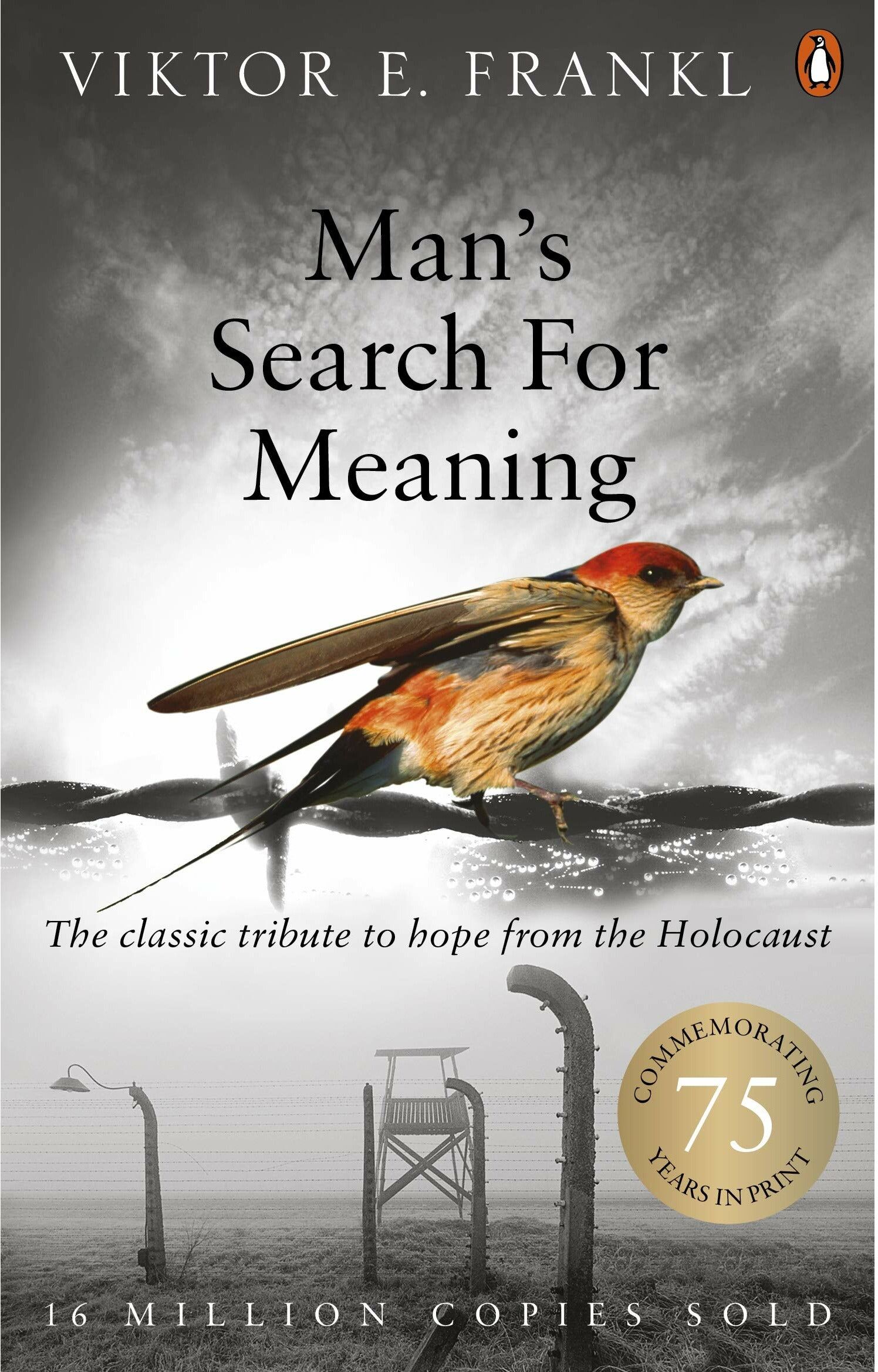
Penguin Man's Search For Meaning: The classic tribute to hope from the HolocaustA prominent Viennese psychiatrist before the war, Viktor Frankl was uniquely able to observe the way that both he and others in Auschwitz coped (or didn't) with the experience. He noticed that it was the men who comforted others and who gave away their last piece of bread who survived the longest - and who offered proof that everything can be taken away from us except the ability to choose our attitude in any given set of circumstances. The sort of person the concentration camp prisoner became was the result of an inner decision and not of camp influences alone. Frankl came to believe man's deepest desire is to search for meaning and purpose. This outstanding work offers us all a way to transcend suffering and find significance in the art of living.8,99 £*Shipping: 2,99 £Secure redirect to the provider
-
Black Swan Last Stop Auschwitz Inspiring Jewish Holocaust Survivor Memoir - Non Fiction - PaperbackTitle:. Last Stop Auschwitz: The Inspiring True Story of a Jewish Holocaust Survivor Memoir Condition: New. Format: Paperback. ISBN: Not provided Overview:. Last Stop Auschwitz delivers a deeply moving first-hand account of unimaginable hardship transformed into a testament of human resilience. Based on the real experiences of Janusz Śniadecki, this gripping non fiction paperback chronicles his harrowing journey as a nine-year-old Jewish boy deported from occupied Poland to the most notorious murder factory in history. Rather than dwelling solely on devastation, the narrative focuses on quiet courage, fleeting moments of kindness, and an unbreakable will to survive against systemic brutality. Written after decades of reflection, the memoir offers a clear-eyed yet profoundly empathetic perspective on one of the darkest chapters in world history. The prose remains accessible and direct, allowing the weight of lived experience to drive every page. Readers familiar with historical testimonies will find this volume both meticulously grounded and emotionally urgent, making it an essential addition to anyone seeking to understand the Holocaust through the eyes of those who were there. What Makes This Book Stand Out:. Unlike many accounts that approach the subject exclusively through institutional records or adult perspectives, Last Stop Auschwitz centres on the childhood experiences of a young deportee navigating starvation, forced labour, medical experiments, and constant mortal danger. Śniadecki writes with remarkable clarity, avoiding sensationalism while preserving the raw truth of camp life. The book stands apart for its thematic emphasis on preservation—the way small routines, shared glances, and whispered stories sustained sanity amid dehumanisation. Historical accuracy is maintained throughout, with verified timelines, geographical realities, and documented camp dynamics anchoring every recollection. The narrative arc moves methodically from arrest and transport through selection, barracks life, and eventual liberation, offering readers a coherent journey rather than fragmented memories. This structured yet intimate approach makes the material highly digestible for contemporary audiences without ever diminishing its gravity. Who This Book Is Perfect For:. This memoir is ideally suited for secondary school students studying modern European history, educators preparing Holocaust education modules, and general readers interested in authentic wartime narratives. It works exceptionally well for intergenerational discussions, family book clubs, and community reading groups seeking thoughtful non fiction titles. Gift buyers looking for meaningful releases for birthdays, Remembrance Day, or academic milestones will appreciate how the book bridges historical awareness and personal reflection. It also appeals strongly to readers of classic survivors’ literature and those researching post-war memory studies. The straightforward language and measured pacing...10,99 £*Shipping: 2,99 £Secure redirect to the provider



-
How can one study architecture or interior design?
One can study architecture or interior design by enrolling in a formal education program such as a bachelor's or master's degree in architecture or interior design at a university or college. These programs typically cover design principles, building technology, history of architecture, and practical skills such as drafting and computer-aided design. Additionally, gaining practical experience through internships or apprenticeships with established architects or designers can provide valuable hands-on learning opportunities. Networking with professionals in the field and attending workshops, conferences, and exhibitions can also help in expanding one's knowledge and skills in architecture or interior design. **
-
Are Holocaust jokes allowed?
Holocaust jokes are highly inappropriate and offensive due to the tragic and sensitive nature of the Holocaust, which resulted in the genocide of six million Jews and millions of others. Making jokes about such a horrific event can be hurtful and disrespectful to the survivors, their families, and the memory of those who perished. It is important to be mindful of the impact of our words and actions, and to show empathy and respect towards those affected by such atrocities. **
-
What is the Holocaust?
The Holocaust was the systematic, state-sponsored persecution and murder of six million Jews by the Nazi regime and its collaborators during World War II. This genocide also targeted other groups, including Roma, disabled individuals, and political dissidents. The Holocaust is a dark chapter in human history that serves as a stark reminder of the dangers of prejudice, discrimination, and unchecked power. It is essential to remember and learn from this tragic event to prevent such atrocities from happening again. **
-
What is the difference between interior design and architecture?
Interior design focuses on the aesthetic and functional aspects of the interior spaces within a building, including furniture, color schemes, and decor. It involves creating a cohesive and visually appealing environment that meets the needs and preferences of the occupants. On the other hand, architecture is the art and science of designing and constructing buildings and other physical structures. It encompasses the overall design, structural integrity, and functionality of the entire building, including the exterior and interior spaces. While interior design focuses on the interior environment, architecture encompasses the entire built environment. **


How can one transition from interior design to architecture?
One can transition from interior design to architecture by pursuing further education and obtaining a degree in architecture. This will provide a deeper understanding of structural design, building systems, and construction methods. Additionally, gaining experience in architectural firms or working on architectural projects can help in making the transition. It is also important to develop a strong portfolio that showcases architectural design skills and knowledge. Networking with architects and seeking mentorship can also be beneficial in making the transition from interior design to architecture. **
With which arguments can one convince Holocaust deniers that the Holocaust happened?
One can use a variety of evidence to convince Holocaust deniers that the Holocaust happened. This evidence includes survivor testimonies, historical documents, photographs, and videos from concentration camps, as well as the confessions of Nazi officials during the Nuremberg Trials. Additionally, the sheer scale of the Holocaust, with an estimated six million Jews and millions of others systematically murdered by the Nazis, is difficult to dispute. It is also important to emphasize the consensus among historians and scholars worldwide about the reality of the Holocaust. **
Top-Angebote
Products related to Holocaust:
-
Laurence Rees Collection 3 Books Set Holocaust, Nazis Final Solution, AuschwitzDescription. The Holocaust: A New History. Two fundamental questions about the Holocaust must be asked:How did it happen? And why?More completely than any other single work of history yet published, Laurence Rees's Holocaust definitively answers them.. Auschwitz : The Nazis & The 'Final Solution': The Nazis and the Final Solution. Auschwitz examines the mentality and motivations of the key Nazi decision makers, and perpetrators of appalling crimes speak here for the first time about their actions. Drawing on Rees's landmark documentary and material from the Russian archives, which challenged many previously accepted arguments, this book reveals significant and disturbing facts - from the operation of a brothel to the corruption that was rife throughout the camp..... The Nazis: A Warning From History. During a 16-year period, acclaimed author and documentary-maker Laurence Rees met and interviewed a large number of former Nazis, and his unique insights into the Nazi psyche and World War 2 received enormous praise.At the heart of the book lies compelling eyewitness accounts of life under Adolf Hitler, spoken through the words of those who experienced the Nazi regime at every level of society. An extensive new section on the Nazi/Soviet war (previously published in Rees' War of the Century) provides a chilling insight into Nazi mentality during the most bloody conflict in history.. Title. Laurence Rees Collection 3 Books Set Holocaust, Nazis Final Solution, Auschwitz. Delivery. Content. Reviews34,99 £*Shipping: 2,99 £Secure redirect to the provider
-
Marshall Light in the Dark: The Last Sanctuary from the HolocaustDescription:. Condition: BRAND NEW. Format: Paperback. Poland, 1943. It was the last refuge of the desperate, a warren of sewers underneath their city. Above, as the Nazis destroyed the ghetto of the city of Lvov, a small band of Jews escaped into a grim network of tunnels, living for fourteen months with the city's waste, the sudden floods, the fumes and the damp, the rats, the darkness, and the despair.. Their only support was a lone sewer worker, an ex-criminal who constantly threatened to leave them. Many died; some falling into the rushing waters of the river, some simply of exhaustion. At one point the survivors found themselves trapped in a chamber, filling to the roof with storm-water.. Yet survive they did, even infiltrating the camps above to find their missing relatives. When the Russians liberated Lvov, they emerged from the sewers filthy, bent double, emaciated, unrecognizable... but alive.. This powerful story based on a long series of interviews, and a hitherto private diary, creates a blazing testimony to human faith and endurance.. Title. Light in the Dark: The Last Sanctuary from the Holocaust. Delivery. Content. Reviews99,99 £*Shipping: 0,00 £Secure redirect to the provider
-
What is the difference between interior architecture and interior design?
Interior architecture focuses on the structural and spatial elements of a space, including the layout, flow, and functionality. It involves designing and coordinating the interior structure of a building, such as walls, ceilings, and floors. On the other hand, interior design focuses on the aesthetics and decorative aspects of a space, including furniture, color schemes, and accessories. It involves creating a cohesive and visually appealing environment that reflects the client's needs and style preferences. While interior architecture deals with the physical structure of a space, interior design focuses on the visual and decorative elements. **
-
What is better, product design or interior architecture?
The answer to whether product design or interior architecture is better ultimately depends on personal interests and career goals. Product design involves creating tangible objects that serve a specific function, while interior architecture focuses on designing interior spaces that enhance the user experience. Both fields offer unique opportunities for creativity and innovation, so it is important to consider which aligns more with your passions and strengths. Ultimately, the decision between product design and interior architecture should be based on individual preferences and career aspirations. **
-
How can one study architecture or interior design?
One can study architecture or interior design by enrolling in a formal education program such as a bachelor's or master's degree in architecture or interior design at a university or college. These programs typically cover design principles, building technology, history of architecture, and practical skills such as drafting and computer-aided design. Additionally, gaining practical experience through internships or apprenticeships with established architects or designers can provide valuable hands-on learning opportunities. Networking with professionals in the field and attending workshops, conferences, and exhibitions can also help in expanding one's knowledge and skills in architecture or interior design. **
-
Are Holocaust jokes allowed?
Holocaust jokes are highly inappropriate and offensive due to the tragic and sensitive nature of the Holocaust, which resulted in the genocide of six million Jews and millions of others. Making jokes about such a horrific event can be hurtful and disrespectful to the survivors, their families, and the memory of those who perished. It is important to be mindful of the impact of our words and actions, and to show empathy and respect towards those affected by such atrocities. **
Similar search terms for Holocaust
-
Penguin Man's Search For Meaning: The classic tribute to hope from the HolocaustA prominent Viennese psychiatrist before the war, Viktor Frankl was uniquely able to observe the way that both he and others in Auschwitz coped (or didn't) with the experience. He noticed that it was the men who comforted others and who gave away their last piece of bread who survived the longest - and who offered proof that everything can be taken away from us except the ability to choose our attitude in any given set of circumstances. The sort of person the concentration camp prisoner became was the result of an inner decision and not of camp influences alone. Frankl came to believe man's deepest desire is to search for meaning and purpose. This outstanding work offers us all a way to transcend suffering and find significance in the art of living.8,99 £*Shipping: 2,99 £Secure redirect to the provider
-
Black Swan Last Stop Auschwitz Inspiring Jewish Holocaust Survivor Memoir - Non Fiction - PaperbackTitle:. Last Stop Auschwitz: The Inspiring True Story of a Jewish Holocaust Survivor Memoir Condition: New. Format: Paperback. ISBN: Not provided Overview:. Last Stop Auschwitz delivers a deeply moving first-hand account of unimaginable hardship transformed into a testament of human resilience. Based on the real experiences of Janusz Śniadecki, this gripping non fiction paperback chronicles his harrowing journey as a nine-year-old Jewish boy deported from occupied Poland to the most notorious murder factory in history. Rather than dwelling solely on devastation, the narrative focuses on quiet courage, fleeting moments of kindness, and an unbreakable will to survive against systemic brutality. Written after decades of reflection, the memoir offers a clear-eyed yet profoundly empathetic perspective on one of the darkest chapters in world history. The prose remains accessible and direct, allowing the weight of lived experience to drive every page. Readers familiar with historical testimonies will find this volume both meticulously grounded and emotionally urgent, making it an essential addition to anyone seeking to understand the Holocaust through the eyes of those who were there. What Makes This Book Stand Out:. Unlike many accounts that approach the subject exclusively through institutional records or adult perspectives, Last Stop Auschwitz centres on the childhood experiences of a young deportee navigating starvation, forced labour, medical experiments, and constant mortal danger. Śniadecki writes with remarkable clarity, avoiding sensationalism while preserving the raw truth of camp life. The book stands apart for its thematic emphasis on preservation—the way small routines, shared glances, and whispered stories sustained sanity amid dehumanisation. Historical accuracy is maintained throughout, with verified timelines, geographical realities, and documented camp dynamics anchoring every recollection. The narrative arc moves methodically from arrest and transport through selection, barracks life, and eventual liberation, offering readers a coherent journey rather than fragmented memories. This structured yet intimate approach makes the material highly digestible for contemporary audiences without ever diminishing its gravity. Who This Book Is Perfect For:. This memoir is ideally suited for secondary school students studying modern European history, educators preparing Holocaust education modules, and general readers interested in authentic wartime narratives. It works exceptionally well for intergenerational discussions, family book clubs, and community reading groups seeking thoughtful non fiction titles. Gift buyers looking for meaningful releases for birthdays, Remembrance Day, or academic milestones will appreciate how the book bridges historical awareness and personal reflection. It also appeals strongly to readers of classic survivors’ literature and those researching post-war memory studies. The straightforward language and measured pacing...10,99 £*Shipping: 2,99 £Secure redirect to the provider
-
Seven A Mother's Promise: My True Story of Surviving Auschwitz and the Holocaust - Non FictionTitle:. A Mother's Promise: My True Story of Surviving Auschwitz and the Holocaust - Non Fiction Overview:. Step into a powerful, intimate memoir that chronicles one woman's extraordinary journey from the shadows of Auschwitz to a future shaped by memory and resilience. A Mother's Promise documents the harrowing realities of life inside a Nazi concentration camp through the eyes of a survivor who refused to be defined by violence. This non-fiction narrative blends stark historical detail with raw, personal emotion, offering readers a human connection to a chapter of history that can feel distant and abstract. The book's title signals a mother’s vow—an anchor in the tumult of loss, fear, and survival—and its pages reveal how courage, faith, and stubborn hope can endure even when all else fails. Written with clarity and empathy, it speaks to anyone seeking to understand the human cost of the Holocaust, while providing a testament to the power of memory. A Sunday Times bestseller, this memoir has resonated with readers for its unflinching honesty, precise storytelling, and the quiet, enduring strength of the human spirit. Ideal for readers of Holocaust history, survivor memoirs, and historical non-fiction that reads like a novel. What Makes This Book Stand Out:. This is not a distant historical overview; it's a living memory told in a clear, gripping voice that places you beside the author as events unfold. The memoir blends precise facts with intimate detail to illuminate both the scale of the horror and the small acts of humanity that kept hope alive. Readers connect with the survivor's voice, feeling the tension of each choice and the resilience required to rebuild a life after liberation. The book stands out for its restrained, respectful tone that honours victims while offering practical, accessible history for newcomers to the subject. It also serves as a poignant classroom resource—time-stamped experiences that help readers grasp chronology, ethics, and the consequences of tyranny without sensationalism. As a Sunday Times bestseller, its impact is proven, and its factual clarity makes it a trustworthy entry point for book clubs, history courses, and personal reading journeys alike. Who This Book Is Perfect For:. This memoir is a compelling choice for adults and mature older teens who want a first-person account of the Holocaust that goes beyond statistics to the human experience. It's ideal for history enthusiasts, students studying World War II, and readers seeking inspirational non-fiction about resilience, memory, and moral courage. Gift buyers will find a powerful, conversation-starting read for anniversaries of historical events or commemorations. Perfect for BookTok and book club discussions that value honest storytelling, this title invites empathy without sensationalism and provides a precise, accessible entry point into one of history's darkest chapters. Key Highlights:. True first-person survivor story from Auschwitz and the...9,99 £*Shipping: 2,99 £Secure redirect to the provider
-
Vintage Black Earth: The Holocaust As History And Warning By Timothy Snyder - Non Fiction - PaperbackTitle:. Black Earth: The Holocaust as History and Warning. Format: Paperback. Overview:. Timothy Snyder’s landmark study, Black Earth: The Holocaust as History and Warning, dismantles long-held assumptions about why the systematic extermination of European Jews occurred. Rather than framing the genocide as an inevitable byproduct of entrenched prejudice or bureaucratic efficiency, Snyder argues that environmental catastrophe was the primary catalyst. Drawing on hundreds of thousands of pages of archival material, he demonstrates how the global ecological crisis of the early twentieth century—combined with the collapse of states during the First World War and its aftermath—created the perfect conditions for radical regime change and mass extermination. The paperback edition brings this vital work of scholarship into an accessible format for everyday readers. By re-examining Hitler’s obsession with land acquisition and racial struggle, Snyder reveals how ecological breakdown shattered the social contract across Eastern and Central Europe, enabling unprecedented state-sponsored violence. This is not merely a historical account; it is a rigorous reassessment of how environmental stressors intersect with authoritarianism, offering profound insights into the mechanisms of genocide.. What Makes This Book Stand Out:. What distinguishes this volume is its bold interdisciplinary approach, merging environmental history with political analysis to completely reshape our understanding of the Second World War era. While most historical accounts focus heavily on ideology or industrial machinery, Snyder centres the narrative on black earth—the concept that desperate searches for fertile land and survival drove populations to embrace extreme nationalism and racial purging. The text meticulously traces how shattered borders, widespread famine, and rapid state fragmentation empowered local militias and radical politicians to operate entirely outside traditional legal constraints. By treating ecological collapse and political violence as deeply interconnected forces, the study challenges conventional moral framings and exposes the structural vulnerabilities that allow totalitarian systems to flourish. Readers encounter a tightly argued, evidence-driven investigation that reframes decades of historiography, encouraging a more nuanced dialogue about how environmental pressure can destabilise societies and enable atrocity on a continental scale.. Who This Book Is Perfect For:. This volume is absolutely essential for serious non-fiction readers, university students, and educators specialising in modern European history, political science, or environmental studies. It appeals directly to anyone fascinated by military history who wants to look beyond battlefield tactics and understand the underlying societal fractures that fuel conflict. Teachers and lecturers will find it an invaluable resource for seminars discussing historiographical debate, state collapse, and the...12,99 £*Shipping: 2,99 £Secure redirect to the provider
-
What is the Holocaust?
The Holocaust was the systematic, state-sponsored persecution and murder of six million Jews by the Nazi regime and its collaborators during World War II. This genocide also targeted other groups, including Roma, disabled individuals, and political dissidents. The Holocaust is a dark chapter in human history that serves as a stark reminder of the dangers of prejudice, discrimination, and unchecked power. It is essential to remember and learn from this tragic event to prevent such atrocities from happening again. **
-
What is the difference between interior design and architecture?
Interior design focuses on the aesthetic and functional aspects of the interior spaces within a building, including furniture, color schemes, and decor. It involves creating a cohesive and visually appealing environment that meets the needs and preferences of the occupants. On the other hand, architecture is the art and science of designing and constructing buildings and other physical structures. It encompasses the overall design, structural integrity, and functionality of the entire building, including the exterior and interior spaces. While interior design focuses on the interior environment, architecture encompasses the entire built environment. **
-
How can one transition from interior design to architecture?
One can transition from interior design to architecture by pursuing further education and obtaining a degree in architecture. This will provide a deeper understanding of structural design, building systems, and construction methods. Additionally, gaining experience in architectural firms or working on architectural projects can help in making the transition. It is also important to develop a strong portfolio that showcases architectural design skills and knowledge. Networking with architects and seeking mentorship can also be beneficial in making the transition from interior design to architecture. **
-
With which arguments can one convince Holocaust deniers that the Holocaust happened?
One can use a variety of evidence to convince Holocaust deniers that the Holocaust happened. This evidence includes survivor testimonies, historical documents, photographs, and videos from concentration camps, as well as the confessions of Nazi officials during the Nuremberg Trials. Additionally, the sheer scale of the Holocaust, with an estimated six million Jews and millions of others systematically murdered by the Nazis, is difficult to dispute. It is also important to emphasize the consensus among historians and scholars worldwide about the reality of the Holocaust. **
* All prices are inclusive of VAT and, if applicable, plus shipping costs. The offer information is based on the details provided by the respective shop and is updated through automated processes. Real-time updates do not occur, so deviations can occur in individual cases. ** Note: Parts of this content were created by AI.